What Is HealthTech?

Maxence Jutel
Co-Founder
@
Meeveem
Before co founding Meeveem, I worked in recruitment and talent across startups and corporate environments, and I developed a strong connection to healthcare through my partner who is a GP. This combination shaped my focus on helping the wider HealthTech industry recognise and unlock the value of clinical and non clinical talent.
Getting Started
Updated: February 18, 2026
Summary
The definitive guide to HealthTech. We clarify the true industry scope, the difference vs. MedTech and where the best career paths are today.
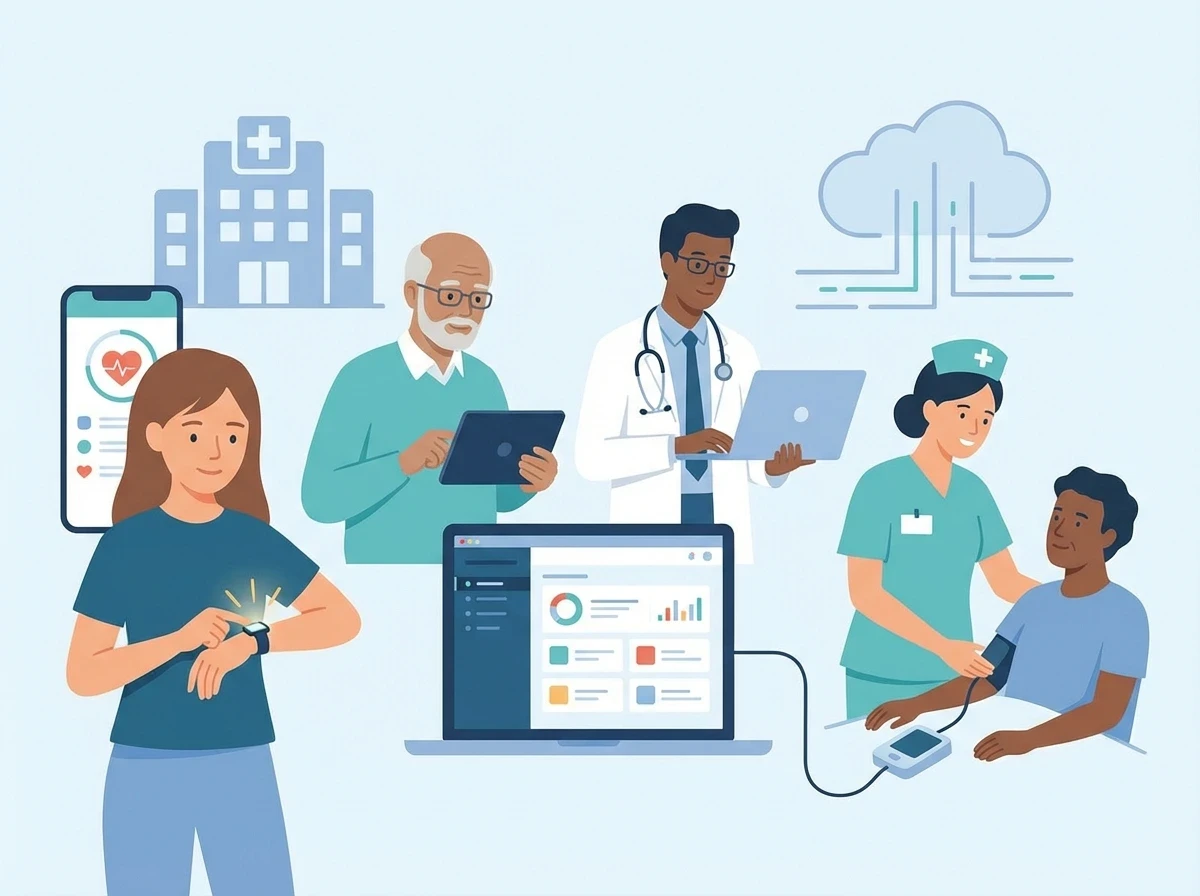
HealthTech is the use of digital technologies and connected devices to improve human health. It acts as the "umbrella" term covering software, data systems, medical devices, and diagnostic tools used for prevention, diagnosis, treatment, and care delivery.
At Meeveem, we speak to candidates and companies in the industry every day. One thing is clear: most definitions of "HealthTech" are either too vague (covering everything) or too narrow (covering only apps).
To navigate your career or build a team in this sector, you need a definition based on how the market actually works. Here is the Meeveem breakdown.
1. A Simple Framework
Global bodies like the WHO describe health technologies broadly as tools to solve health problems. We apply that idea directly to the modern job market.
If a product is primarily a technology tool and its purpose is to improve health or healthcare, it fits inside HealthTech.
2. What Fits Inside HealthTech? (The 4 Pillars)
When you look at the job market, most HealthTech products and companies fall into one of these four groups.
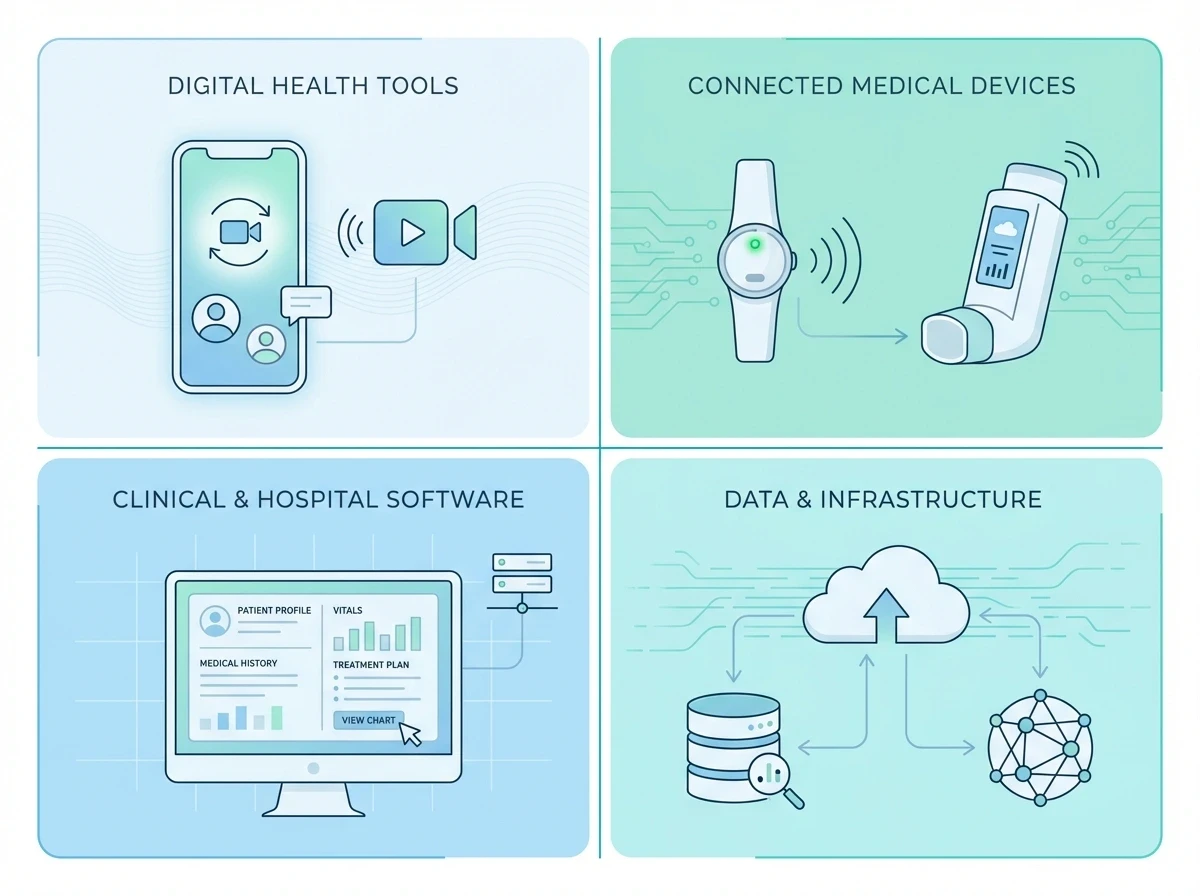
a) Digital Health Tools
This is software that patients or clinicians interact with directly. It is often what people think of first when they hear "HealthTech."
Examples: Virtual consultation platforms (Telehealth), mental health apps, medication reminders, and digital therapeutics (software as a drug).
b) Connected Medical Devices
These are physical hardware devices that have a meaningful digital or data component.
Examples: Continuous glucose monitors (CGM), smart inhalers, wearable sensors (like ECG patches), and connected hospital equipment.
c) Clinical & Hospital Software
These are the B2B tools used inside hospitals and clinics to deliver care.
Examples: Electronic Health Records (EHR), clinical decision support systems, AI imaging analysis tools, and workflow management platforms.
d) Data & Infrastructure
This is the "back end" that keeps the healthcare ecosystem running. It is a massive growth area for software engineers and data architects.
Examples: Health data analytics platforms, interoperability tools (making systems talk to each other), and cybersecurity specifically for patient data.
3. HealthTech vs. MedTech vs. Digital Health
These terms are often used interchangeably, but in the industry, they mean different things. Here is how to distinguish them:
Digital Health: Focuses strictly on software-based tools (apps, platforms, remote monitoring).
MedTech (Medical Technology): Focuses on hardware and equipment used to diagnose or treat (implants, surgical robots, MRI machines).
HealthTech: The wider ecosystem. It acts as the umbrella that includes Digital Health, tech-enabled MedTech, and the data infrastructure connecting them.
The Rule of Thumb: Every digital health app is part of HealthTech. Every smart medical device is part of HealthTech. HealthTech is simply the name for the technology side of healthcare.
4. Where Do Biotech and Pharma Fit?
This is where we draw a clear line.
Biotech and Pharma are separate industries focused on biology, chemistry, drug discovery, and clinical science. HealthTech focuses on engineering, software, data, and hardware.
Note: These worlds are converging. We are seeing more "TechBio" companies using AI for drug discovery. However, for now, Meeveem views them as adjacent industries. If you are a software engineer, you work in HealthTech; if you are a molecular biologist, you likely work in Biotech.
5. Why HealthTech Matters (and Why Work Here?)
People searching for "what is healthtech" are usually looking for impact. This industry is currently changing three fundamental things:
Patient Autonomy: It makes it easier for people to monitor their own health and spot risks early (Consumer Health).
Clinical Efficiency: It helps doctors diagnose accurately and reduces manual administrative burnout (Clinical Workflow).
System Intelligence: It connects siloed data to help hospitals understand capacity and improve safety (Health Systems).
Analysts consistently point to HealthTech as one of the fastest-growing sectors in the global economy, driven by the adoption of AI, remote care, and data interoperability.
Frequently Asked Questions
Is HealthTech the same as Healthcare? No. Healthcare is the service of delivering care (doctors, nurses, hospitals). HealthTech is the tools and technology that support the delivery of that care.
What are the biggest trends in HealthTech? Currently, the biggest trends are Artificial Intelligence (AI) in diagnostics, Remote Patient Monitoring (RPM), and "Interoperability" (making data flow freely between systems).
Is HealthTech a good career path? Yes. It combines the rapid innovation of the tech sector with the stability and mission-driven nature of the healthcare sector.
Ready to join the industry?
Now that you know the definition, explore the opportunities. Browse HealthTech Jobs or Join the Meeveem Network.